Jessica Geboers, a Ryerson graduate moved to downtown Toronto to attend University in 2011. Jessica has cerebral palsy which leaves her dependent on two canes to commute around the city. In her first years in Toronto, Jessica struggled to navigate the TTC with her disability.
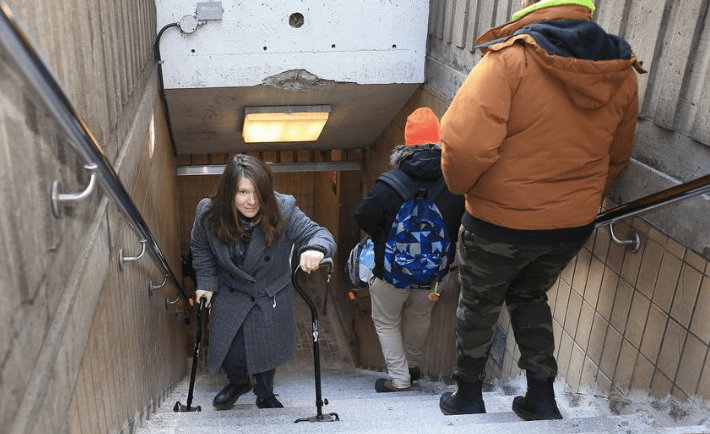
photo courtesy of The Toronto Star
The slogan “dignity and independence for our customers” is clear on the TTC’s accessibility page where their accomplishments are highlighted well, but there’s a short, almost disappointing history behind their developments.
According to the TTC’s accessibility page, only 46 out of the 75 subway stations are accessible. Accessible meaning the stations have the appropriate entrances, fare gates, and elevators. I will acknowledge that any new stations being built do have accessibility issues in mind, but the problem is that the older stations, the ones downtown with more traffic, are not accessible.
There are multiple times on the subway map where two or three stations in a row do not have elevator access. This further complicates and elongates the commute of someone in need of elevator access. Elevators and subway lines are often out of service or under maintenance, those with accessibility needs may not be able to adjust to these natural hurdles thrown at city passengers. These inconveniences may leave passengers feeling discouraged and embarrassed with the inability to commute independently. How well is our public transit system doing if not all of the public can use it conveniently?
Here is a short video following a wheelchair commuter Peter as he struggles with his mobility issues throughout his daily transit on the TTC. Reporter Ginella Massa also speaks of the flawed alternatives those with accessibility issues resort to.
The TTC has indeed worked towards having low floored busses, audible and visual stop announcements, and more convenient streetcar carts. But their progress is still shadowed by the time it is taking for elevators to be constructed in every subway station. Those with disabilities, parents with strollers, the elderly, the injured, support animals, and simply those who may not be feeling well or may have luggage all need elevators. It’s ridiculous to think that such a significant amount of the population may be disadvantaged on their daily commutes.
It has been 30 years since the TTC set a goal to make all subway stations accessible in 1990, initially targeted to be completed by 2020. But three years ago, the project was pushed back to be completed by 2025. With 29 subway stations left to make accessible in the next five years, Toronto’s Mayor John Tory stated that despite the city’s progress, there are signs that the TTC is falling behind on their 35 year plan.
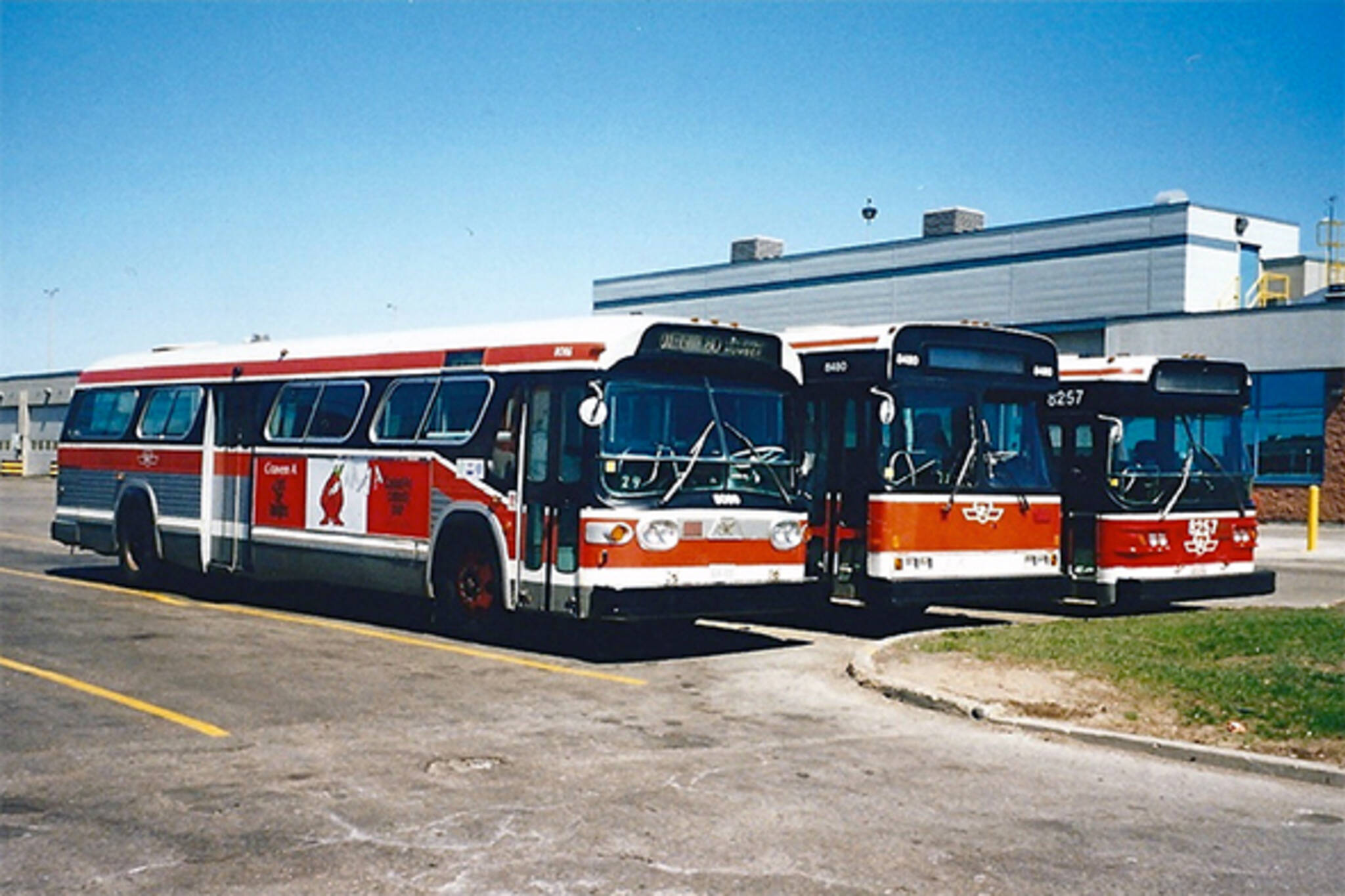
Notice the high rise in the busses’ seating above street level, the stairs, and the narrow doorways, all restricting a wide variety of travellers.
The city has made progress towards making its public transit more accessible, but the city needs complete accessibility throughout its public system. The TTC belongs to the entire city and the TTC needs to own up to their responsibilities and deliver convenient transportation to all its city dwellers.
Sources used:
(I’ve been trying to embed the links for a few days now but it isn’t working, my apologies!)
http://www.ccdonline.ca/en/transportation/
http://www.ttc.ca/TTC_Accessibility/index.jsp
Accessible Public Spaces in Ontario by Greg Thomson AODA
For Torontonians with Disabilities, Riding the TTC is Still A Struggle by Jessica Geboers
Accessible Transit – A Daily Struggle with Accessibility Issues on the TTC by Ilanna Mandel
 Maher Blogging the Just City 2020