Long Blog 4 – a Need at its Extreme

The homelessness crisis isn’t new to Toronto. According to Fred Victor, a Toronto-based social service organization, there are over 9200 homeless people in the streets of Toronto every night with nearly 30% over the age of 50. Shelter is one of the basic human necessities, the homeless population does not have that. The alarming 9200 does not include those living in overpopulated shelters. The need for shelter has accelerated since the COVID-19 crisis was officially labelled a pandemic this past March.

While the general population has been advised to stay sanitized, social distance, minimize unnecessary outings, and to stay home quarantined, the homeless population has lost many of their resources. Local shops and restaurants have been closed or are no longer accepting cash and drop-in food centres and shelters have either closed or must limit service due to government enforced social distancing policies. Shelters were already at their maximum capacity or overcrowded and even with the city’s efforts in leasing hotels for housing, there are still 500 to 1000 people reported to be living without so much as a bad for themselves (taken from Nick Westoll of Global News Canada).

“While COVID-19 doesn’t discriminate, we know that it is disproportionately dangerous for those who are homeless and in the shelter system,”

Joe Cressy, the chair of the city’s board of health

I have spoken about issues surrounding the dehumanization of the homeless population. You can read about it in my first long blog here. I speak of our negligence, active detachment, and the lack of humanly support given to the homeless. We actively leave the humans in our cities out of our minds and treat them as they are not equal to us. This problem escalates as homeless people were not immediately given care when the pandemic hit Toronto.

Cathy Crowe, a Canadian street nurse pointed out the lack of urgency and preparedness for the homeless in Toronto. She applauded the city’s efforts in opening eight new facilities for housing to a total of 69 shelters, but highlighted the lack of urgency, that every homeless person should be off the streets with a room of their own. Crowe also mentioned the importance of maintaining social distancing and cleanliness procedures in existing shelters and prioritizing testing for those entering housing facilities. The homeless population is generally more susceptible to disease and have higher mortality rates as they often have difficulty accessing the health care and social services they need (The Street Health Report, 2007). Having hundreds of people with weakened immune systems due to age, illness, or addiction in small confinements with minimal staff to ensure proper distancing measures is feeding grounds for the spread of COVID-19. The lack of precautions will just worsen the issue for all.

This video from Global News of Dr. Eileen de Villa, Toronto’s medical officer of health, explains the measures to move 80 people living in the Seaton House shelter after one of its residents was tested positive for the corona virus. Early testing before granting entry to healthy shelters could have prevented this move. Eighty people will have to adjust to a shift, some of those 80 people may be infected, and they may spread the virus to other shelter residents and their staff. The city doesn’t have the resources to individually isolate the 80 people who may have been exposed to the virus. I can appreciate the new measures taken place as a result of this outbreak and two others at The Willowdale Welcome Centre and Dickson Hall as of April 8th, more information on these outbreak statements can be found here. But these new measures unfortunately don’t take away from the fact that the city was ill-prepared in acknowledging the severity and need for care for those experiencing homelessness.

It saddens me to see the city’s neglect of our homeless population, especially in the midst of this dangerous pandemic. The lack of urgency in protecting this population while they have lost most of their resources and support system and where they are weakened and more vulnerable to disease shows failure in the city’s care of its citizens. I understand that it is not easy to care for and keep track of over 9200 people experiencing homelessness, but emergency preparedness and preventative measures could have been enforced to limit the spread of COVID-19 and ensure the safety of Toronto’s population.

I hope those who are able will continue to follow the advised safety precautions. Stay safe Toronto.

Sources

^ Fred Victor’s website as embedded in the first paragraph above

https://globalnews.ca/news/6734648/toronto-homeless-covid-19-coronavirus-support/
Short Blog 8 – Comment on Kabir’s Long Blog 3

I have lived in Scarborough my entire life, I have seen the ridiculous inflation of the housing market in Toronto where homes have tripled in their value over the last 15 years, but salaries have moreso remained constant. I also commute 2 hours to and from school and I agree it is exhausting, it stresses me that I am unable to afford housing in my city and I wonder if I ever will be able to complete my dream of buying a home. I wonder what the future of Toronto holds as much of its youth and young adults are unable to afford living here. On a lighter note, I like the title of your blogpost, very clever haha.

Short Blog 7 – Meal Exchange

Image taken from Meal Exchange’s 2015-2016 Annual report

Meal Exchange (MX) at 401 Richmond is a registered charity which provides sustainable and innovative meals to students in need. MX gets post-secondary students involved by supporting soup kitchens, gardens, farms, and food banks to promote healthy and sustainable choices. MX holds fundraising events and have raised over $1.8million worth of food donations to campuses across Canada. The goal is to promote sustainability in the campus food purchasing industry that greatly promotes inequality and pollution in the food system. Students are driving this change with the hopes of motivating other and encouraging the use of innovative, ethical, and sustainable food practices. Especially in a big city like Toronto, students are very disconnected and uninformed as to where their food comes from and what it takes to get to their plates, MX hopes to change that.

Long Blog 3 – Flatten the Curve

Coronavirus Experts Want to 'Flatten the Curve' to Fight the ...
Taken from Claire Gillespe of Heath.com

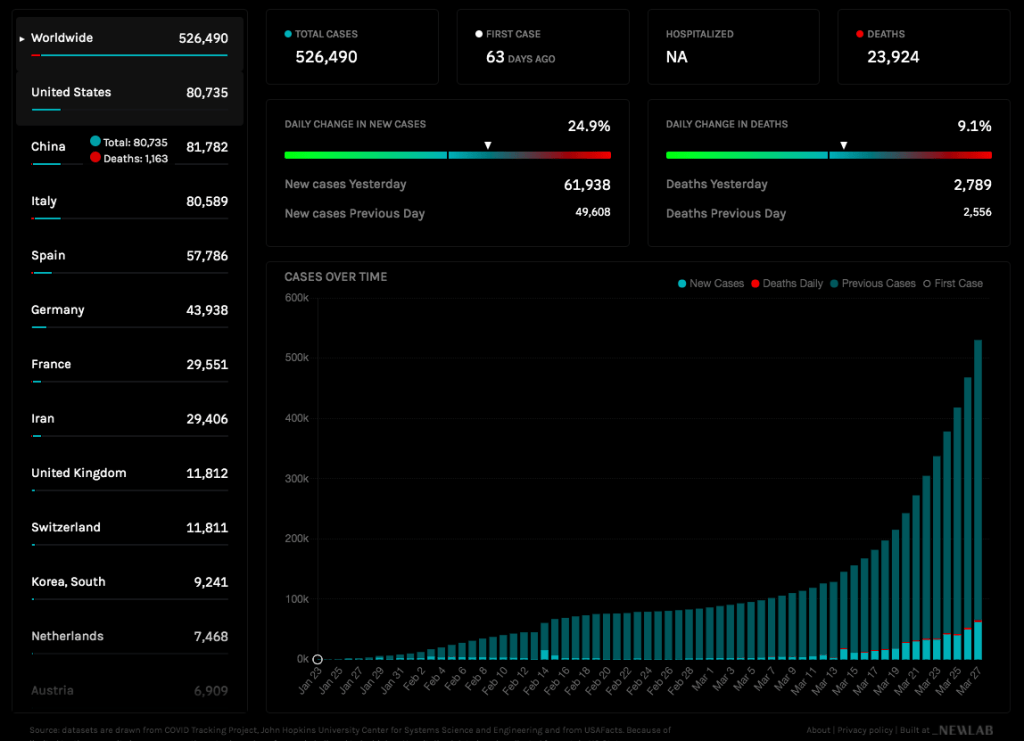
You may have seen #stayhome trending on twitter and instagram, millions of tweets and stories encouraging people to be responsible and flatten the curve seen above. This graph indicates the dangerous amount of infected individuals if preventative measures aren’t taken seriously. The goal to slowly isolate the virus and beat it is to flatten the curve, to enforce the cleanliness and protective methods. The labelled pandemic is bringing in more cases overnight than ever before as the number of confirmed cases rises past 500 000 worldwide.

Flattening the curve includes practicing the recommended protective methods including social distancing. Social distancing is when we make the effort to minimize contact with others especially outside of housemates. This is key to stopping the spread of the virus and limiting the amount of those in need of immediate care.

I personally haven’t been impacted greatly, I might not be working right now, but my family still can, for that I am grateful. However, I am now not able to visit my relatives, some of which are sick or grieving and that restriction is something I wish to be gone as soon as possible. People unnecessarily leaving their house and visiting friends are elongating the need for quarantine. A student thinking they’re immune because they are young is selfish. Anyone can easily still carry the virus and spread it to people who are vulnerable without showing any symptoms themselves.

Doctor's Note: How to do social distancing during coronavirus ...
Taken from Getty Images

Living in a greatly populated, ever-growing city makes it difficult to be socially distant, I understand. It’s hard to be distant when needing groceries or when you want to go on a walk, but limiting travel outside of your home only to when it’s strictly necessary is the difference between a possible hundred infected.

Here is a link to a short video by BBC News’s Health Correspondent Laura Foster explaining why social distancing is key to limiting the spread of COVID-19.

https://www.bbc.com/news/av/health-52008673/coronavirus-update-why-does-staying-at-home-help

The point of this blog is to highlight the importance of taking responsibility and sacrificing any unnecessary outings to limit the spread and lower your chance of becoming infected. The OPP are warning that fines for individuals not practicing social distancing are on their way and that open businesses who are not on Doug Ford’s essential businesses list are at risk as well.

I apologize if this seems more like a rant than a thoughtful blogpost. I’m simply frustrated by any negligence demonstrated as is everyone who is following the proper safety precautions. We all want this seemingly unreal period of our lives to be over. Hope you are doing well and I hope we stay well.

Sources used:

https://www.canada.ca/en/public-health/services/diseases/2019-novel-coronavirus-infection/health-professionals/public-health-measures-mitigate-covid-19.html

https://www.bbc.com/news/av/health-52008673/coronavirus-update-why-does-staying-at-home-help

https://www.hopkinsmedicine.org/health/conditions-and-diseases/coronavirus/coronavirus-social-distancing-and-self-quarantine

OPP warn fines could come if social distancing not practised by The Intelligencer

Short Blog 6 – A Student’s Response to COVID-19

https://www.statnews.com/2020/03/26/covid-19-tracker/

First year has been cut short. Classes cancelled, events cancelled, plans cancelled, and work cancelled. Friday morning I woke up, got ready, and hopped on the TTC bus on my way to class. During the little above-ground gap between Broadview and Castle Frank station on Line 2, I got a notification saying my class had been cancelled due to COVID-19 concerns. I went home initially excited that classes were cancelled; ‘I wont have to commute and can stay home all day!’ That excitement quickly vanished come Monday when I realized I would never physically go to class again, the year was over. Students are getting kicked off campus and everyone is now instructed to stay home, it’s terrifying. We truly don’t know what the next few weeks are going to bring us and the best thing we can do is stay inside. I feel hopeless. First year may have been cut short, but I just wish for the general population to abide to any government issued statements so the thrill of a new decade wont be cut short. I still have hope for summer 2020.

Long Blog 2 – “Dignity and independence for our customers”

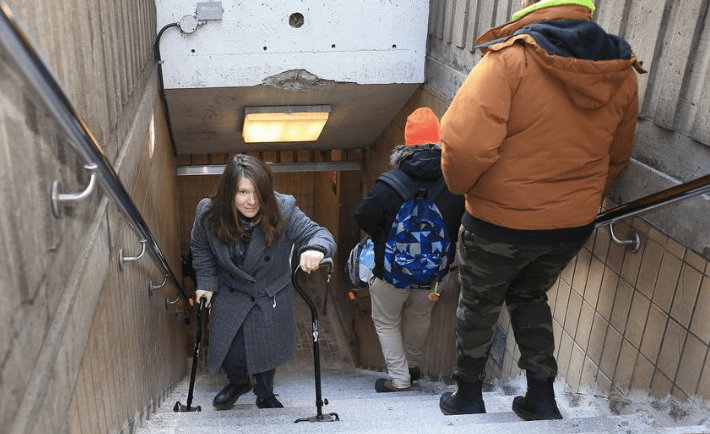
Jessica Geboers, a Ryerson graduate moved to downtown Toronto to attend University in 2011. Jessica has cerebral palsy which leaves her dependent on two canes to commute around the city. In her first years in Toronto, Jessica struggled to navigate the TTC with her disability.

This image has an empty alt attribute; its file name is screen-shot-2020-03-05-at-3.59.28-pm.png
Jessica Geboers climbing a steep flight of stairs
photo courtesy of The Toronto Star

The slogan “dignity and independence for our customers” is clear on the TTC’s accessibility page where their accomplishments are highlighted well, but there’s a short, almost disappointing history behind their developments.

According to the TTC’s accessibility page, only 46 out of the 75 subway stations are accessible. Accessible meaning the stations have the appropriate entrances, fare gates, and elevators. I will acknowledge that any new stations being built do have accessibility issues in mind, but the problem is that the older stations, the ones downtown with more traffic, are not accessible.

There are multiple times on the subway map where two or three stations in a row do not have elevator access. This further complicates and elongates the commute of someone in need of elevator access. Elevators and subway lines are often out of service or under maintenance, those with accessibility needs may not be able to adjust to these natural hurdles thrown at city passengers. These inconveniences may leave passengers feeling discouraged and embarrassed with the inability to commute independently. How well is our public transit system doing if not all of the public can use it conveniently?

Video courtesy of City News’s reporter Ginella Massa

Here is a short video following a wheelchair commuter Peter as he struggles with his mobility issues throughout his daily transit on the TTC. Reporter Ginella Massa also speaks of the flawed alternatives those with accessibility issues resort to.

The TTC has indeed worked towards having low floored busses, audible and visual stop announcements, and more convenient streetcar carts. But their progress is still shadowed by the time it is taking for elevators to be constructed in every subway station. Those with disabilities, parents with strollers, the elderly, the injured, support animals, and simply those who may not be feeling well or may have luggage all need elevators. It’s ridiculous to think that such a significant amount of the population may be disadvantaged on their daily commutes.

It has been 30 years since the TTC set a goal to make all subway stations accessible in 1990, initially targeted to be completed by 2020. But three years ago, the project was pushed back to be completed by 2025. With 29 subway stations left to make accessible in the next five years, Toronto’s Mayor John Tory stated that despite the city’s progress, there are signs that the TTC is falling behind on their 35 year plan.

Image result for ttc 1990 bus
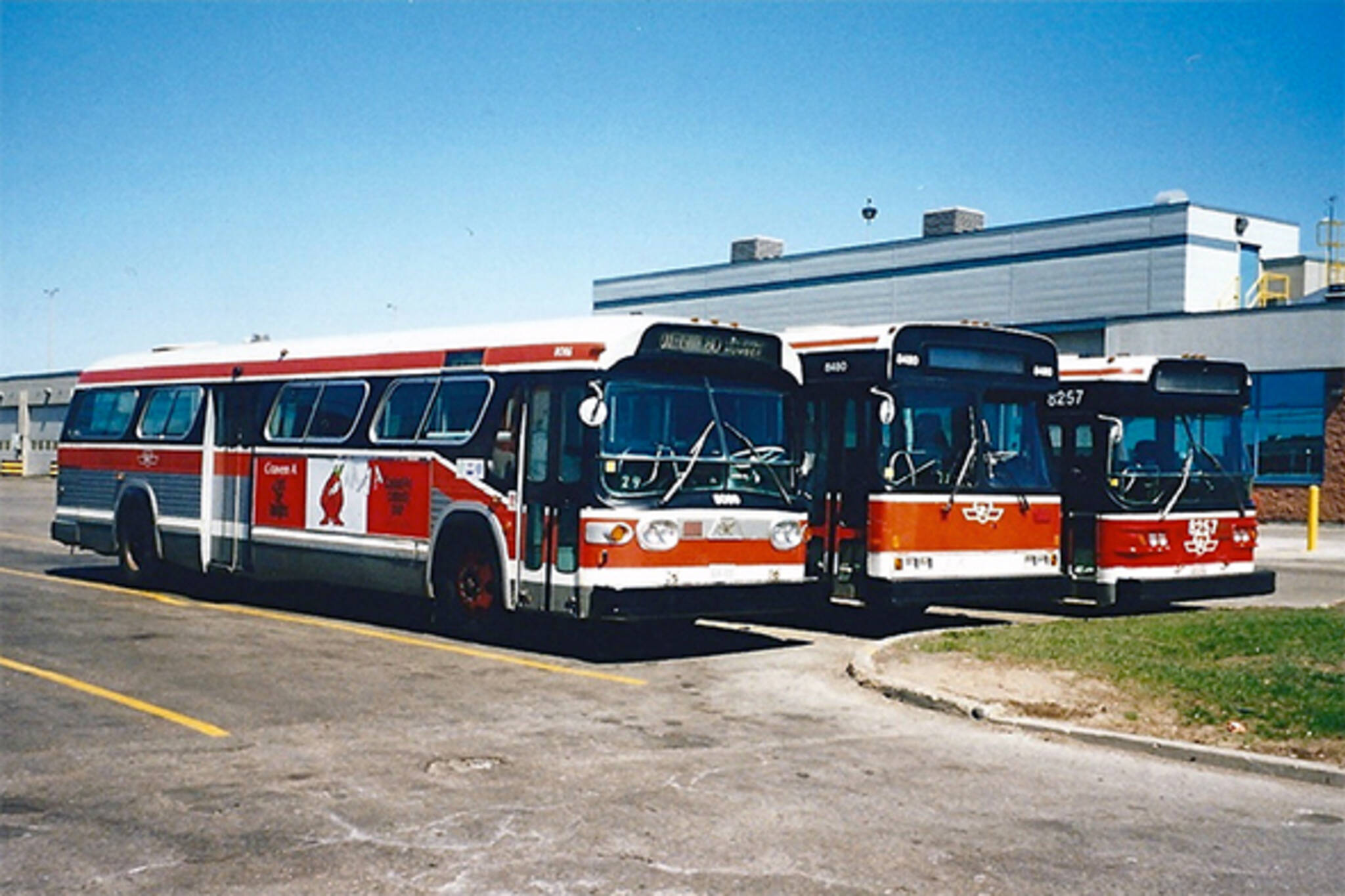
Public busses from the 1990s

Notice the high rise in the busses’ seating above street level, the stairs, and the narrow doorways, all restricting a wide variety of travellers.

The city has made progress towards making its public transit more accessible, but the city needs complete accessibility throughout its public system. The TTC belongs to the entire city and the TTC needs to own up to their responsibilities and deliver convenient transportation to all its city dwellers.

Sources used:

(I’ve been trying to embed the links for a few days now but it isn’t working, my apologies!)

https://www.thestar.com/news/city_hall/2019/03/10/a-look-at-ttc-accessibility-through-the-eyes-of-a-rider-who-uses-two-canes.html

http://www.ccdonline.ca/en/transportation/

http://www.ttc.ca/TTC_Accessibility/index.jsp

Accessible Public Spaces in Ontario by Greg Thomson AODA

For Torontonians with Disabilities, Riding the TTC is Still A Struggle by Jessica Geboers

Accessible Transit – A Daily Struggle with Accessibility Issues on the TTC by Ilanna Mandel

Short Blog 5 – Comment on Brooklyn’s Short Blog 2

I find the caption very interesting as it shows how we’ve now normalized the distance we put between ourselves and those who are homeless. We dehumanize those who are struggling and put them below us. They truly are just unemployed people who don’t have the luxury of being able to rely on others as people we now deem as unemployed do. The word unemployed is now used to explain someone who is comfortable living with family or a loved one without a job, not someone on the street, not a ‘hobo’.

Short Blog 4 – Comment on Rekha’s Long Blog 1

I really love living in Toronto, but I fear I that I won’t be able to as the housing market is insane and unjustified. I would expect such a rise if minimum wage had gone up significantly consistently over the past ten years, but I don’t see a direct correlation. This problem also encourages the construction of multiple suburbs in the GTA. Not necessarily a problem, but I find it interesting that new cities are being built to try and replicate the metropolis of Toronto. Kinda similar to how we often count the areas in the GTA as Toronto, like we’re trying our best to include everyone in the city.

Long Blog 1 – Homelessness in Toronto

Winters in Toronto can be brutal. This season, we’ve experienced temperatures feeling as low as -16°C with piles of snow on top of it, but we’re fortunate. I will always complain about the cold when I’m outside, especially at night when the sun is down, but I rarely think of those who aren’t able to warm up as they get home. I have periods where I’ll be walking and freezing, but then I can look forward to sitting on the bus or subway where it is warmer, I don’t think of those who don’t get to experience warmth in their sight.

Image result for toronto homeless memorial

This year, The Toronto Homeless Memorial at the Church of Holy Trinity announced its thousandth life lost on our city streets. One thousand lives that held potential, that had parents, or maybe children and lovers, one thousand lives that I’ve sadly never thought about.

These are the lives of the people we ignore on the streets, the ones we see as inhuman as we make an effort to distance ourselves from them. These are the lives that we could have taken care of, where the city could have provided more services in their need, basic necessities such as shelters, food banks and physical and mental health care. But again, we distance ourselves from these people, we try our best not to see ourselves in them, but they are human just as us.

Forty-three year old Paul did an interview with CBC’s Nick Purdon explaining his experience as a homeless man. Paul had been living on the streets for six years as of October 2019, he lost his job due to a back injury, something that could happen to anyone.

http://www.cbc.ca/player/play/1658800707660/

This is a video of Paul explaining how the way he has been treated as a homeless man has significantly impacted his mental health and how he sees himself in a negative way.

Canada is known for its high quality of living, but how are we to ignore our citizens who are struggling behind the curtain? Turning a blind eye to the homeless in our city feeds the stigma that those without homes are “aliens” as described by Paul. Leaving those who are struggling to obtain their basic necessities with a stigma that dehumanizes them worsens their mental health.

The city of Toronto has a homelessness crisis, and factors that contribute to the negative being of the humans that inhabit our streets needs to be addressed. A humanizing conversation needs to happen, but not just that; the city has to work hard to make those who feel alienated believe they are a welcomed part of our society as they should be. The stigma needs to be reduced, to make humans feel human.

Sources Used

Frankish, C. J., Hwang, S. W., & Quantz, D. (2005). Homelessness and health in Canada: research lessons and priorities. Canadian journal of public health96(2), S23-S29.

Meet some of the homeless in Canada’s largest city – who they are may surprise you | CBC News. (2019, December 26). Retrieved from https://www.cbc.ca/news/canada/toronto/homeless-in-toronto-1.5400781

Smart, R. G., & Walsh, G. W. (1993). Predictors of depression in street youth. Adolescence, 28(109), 41.

Short Blog 3 – Creating Excitement

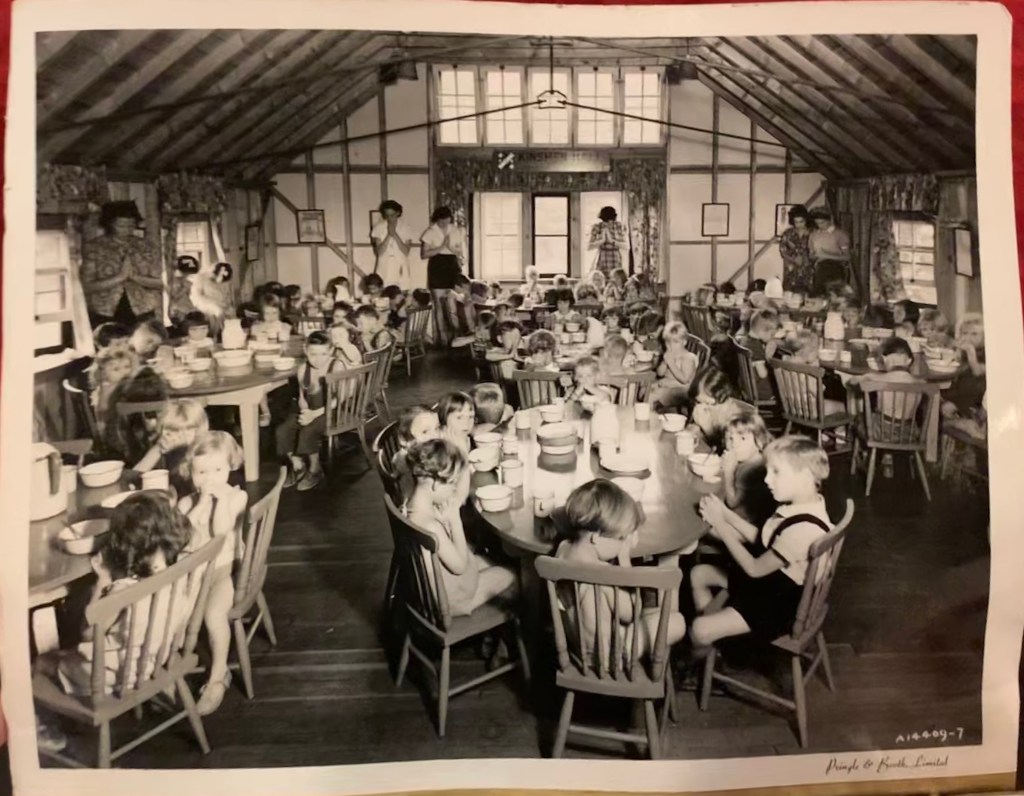
Children praying before eating at Bolton Summer Camp in 1934
Courtesy of the Thomas Fisher Rare Book Library

This past week, we visited the Thomas Fisher Rare Book Library to view a display of various archives relevant to the city. One display that caught my attention was of a summer camp in 1934. Bolton Summer Camp was a means of bringing nature back into kids’ lives, about getting them active outside of Toronto. The camp was for less fortunate children who generally weren’t given the opportunity to go to camps in hopes of creating excitement and admiration for nature. This reminds me of the opportunities I’ve been given to go camping and skiing throughout public school and high school, trips that were offered to students to generate a desire for adventure and respect for nature. Those trips contain some of my favourite memories, I can image that Bolton Summer Camp also held the same value to many of the children photographed above.